
Respectfully Decline
On burning napkins and opting out

I have tried so many times, over the last few months, to write something on Substack.
Each time, I picture my essay landing into two-hundred inboxes like an inconsequential blip and want to throw my laptop across the room. Surely, your inboxes are as full as mine, bursting at the seams with bills, seasonal offers from every business you’ve ever interacted with, and countless newsletters that you hope to have time to read, but probably won’t.
What could I possibly have to say that is worth taking up five to ten minutes of your time, I lament into the void, as I banish another half-written essay to the drafts folder.
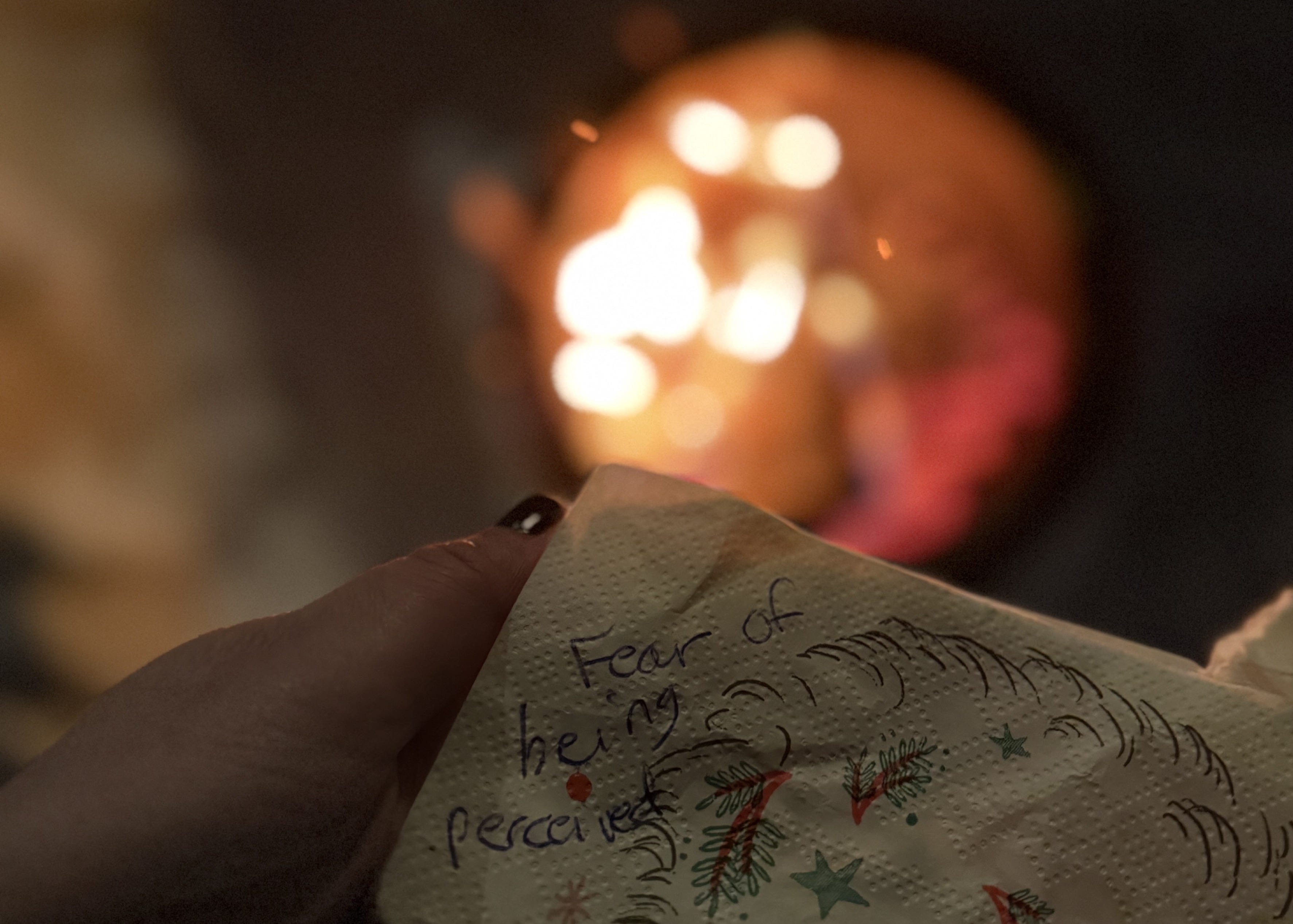
Don’t let the fact that I’ve pressed publish on this one fool you— it’s not that I’ve finally found the perfect thing to write about. But I’m trying to let go of the question. In a last-ditch show of New Year’s Eve motivation, I scribbled “fear of being perceived” on a vintage Santa napkin and threw it into a fire pit, determined to leave it behind in 2025. Onwards, new me, etc.
This fear is a big one for me. While I long for the honest intimacy of being known, the uncontrolled assumptions in being perceived incapacitate me. I started this Substack a couple of years ago with a bang, sharing detailed and deeply personal accounts of religious trauma along with vulnerable writing woes and querying updates. But at some point, I started to question the relevance of my ramblings, and whether direct-depositing my most personal thoughts into people’s inboxes was actually kind of cringeworthy.
It turns out that, devastatingly and despite my best efforts, I very much care what people think. The most aspirational version of myself rolls her eyes at this, but present-day me is adopting a fake-it-til-you-make-it approach.
I burned the napkin, after all.
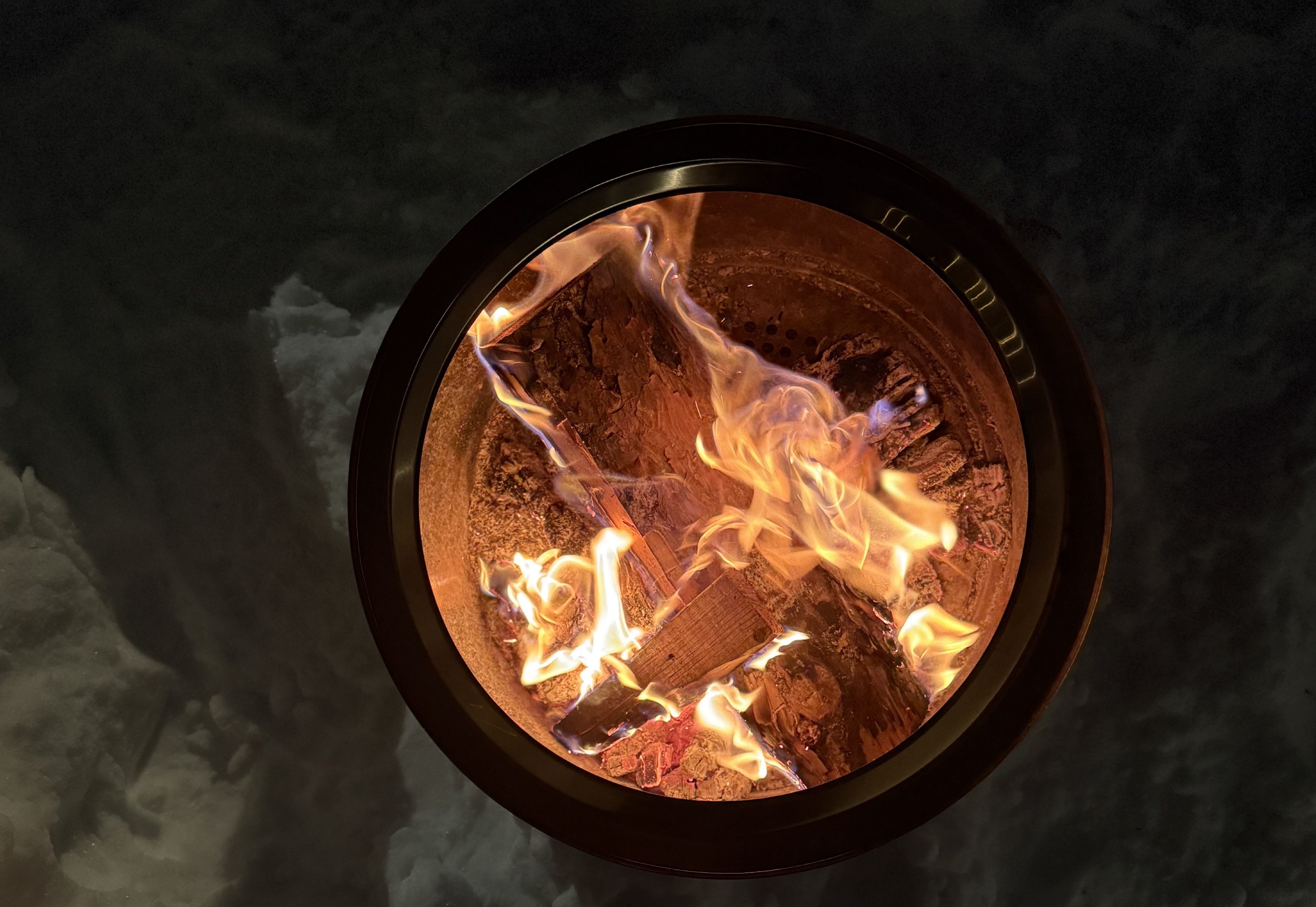
An apt visual to carry forward into 2026, a year that will hopefully involve a whole stack of metaphorical napkins to burn, each labelled with something I will henceforth be respectfully declining. Like worrying about the expectations and opinions of people I don’t know and/or don’t care about, and the imposing pressure of striving for a Chat-GPT prompted, high-efficiency, aesthetically pleasing existence I don’t actually want.
The other day, my 14-year-old daughter had friends over. We live in an older home, which we’ve lovingly filled with plants and art and books and records and pottery and throw blankets, and I never feel anything other than warmth and comfort when I step through my front door. I never think of my outdated kitchen or dreary grey carpets when I’m drizzling tangy glaze over a tray of lemon scones, or singing along to a Cranberries record with my feet kicked up on the coffee table. But, in the spirit of full, embarrassing transparency, it’s all I can think about when my kids host their friends who, I’m suddenly sure of it, must all live in modern, newly renovated, Crate & Barrel aesthetic homes. (I exaggerate, but still.)
I partially blame the millennial-imposed urge to have an Instagrammable life, as well as the societal expectation that this is the kind of home I should be striving for. But I don’t actually want a trendy home with sparsely decorated shelves. What I want are framed concert posters and mismatched Christmas decorations and shelves full of multicoloured books with outward facing spines.
“Your house is such a home,” my daughter’s friend said in the hallway, unaware that I could hear them.
The other piped up, “Oh my god, I was just thinking that! Your house feels like such a nice, cozy place to wake up on a Saturday morning.”
“Yeah, it is!” my daughter replied.
And I thought, bingo. My home is a nice place to wake up on a Saturday morning. That is what I want my home to be. What a relief, to simply opt out of this race to achieve something I don’t even care about.
None of this is groundbreaking, I know.
Ideally, it would never occur to me to judge anything about my life by anyone else’s standards. Not my home, and not what I chose to publish on Substack. Especially since on paper, I very much believe in not caring about other people’s perceptions of me. But like most mission statements, this one’s easier to claim than to truly live out.
That doesn’t mean I won’t try, though. Starting with finally publishing this damn Substack essay, and freeing myself from the curse of piling drafts. You might not like it, or maybe you will. Either way, it’s totally fine.
Favourite Lines Book Club
“I never knew my mother. She died the night that I was born, and so, we passed each other in the dark.” – Allegra Goodman, “Isola”
It feels a bit like cheating, to pick a book’s first line as a favourite. This isn’t the only line I transcribed from Isola, but it’s the one I keep returning to. Simple yet haunting. With this line, the author pulls the thread of the protagonist’s connection with her mother and continues to unravel it throughout the book. Isola is a beautiful story of resilience. I’m not usually a big historical fiction reader, nor do I typically gravitate towards harrowing tales of survival, but I really enjoyed this one!
Never knew "have my home complimented by teenage childs friends for being cozy" needed to be added to my bucket list but here we are. I deeply relate to this Sophie! And while I adore the quote "perfect is the enemy of good" I wonder if we can tack on something like "cringe is the enemy of connection" or vulnerability or whatever it means to be human. But just about every time someone says "I was worried I was too cringe" they're referring to something which *I* thought they were very cool and brave for sharing.
So beautifully said, Sophie! I really relate to these worries, but I love how clearly and beautifully you always articulate your thoughts and what you want. And I love that your daughter’s friends said that, it’s the same impression I get from your photos 🩷